
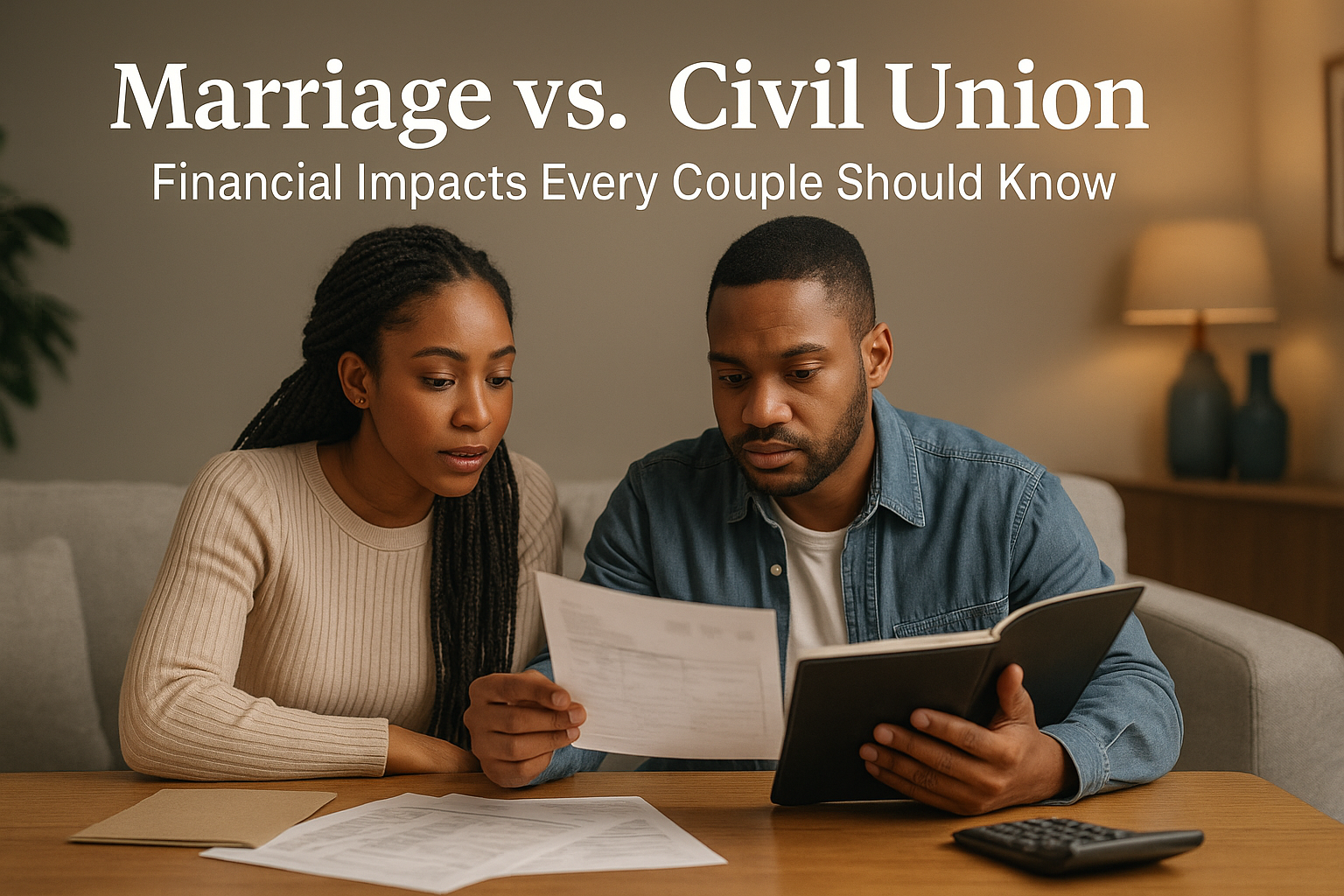
When a couple decides to formalize their relationship, one important choice often arises: should we get married or enter a civil union? While both offer legal recognition, the financial implications of each path can differ — sometimes in significant ways.
Understanding these differences can help you make an informed decision that protects both your love and your money.
What’s the Difference Between Marriage and Civil Union?
A marriage is a legal contract recognized federally and in most jurisdictions worldwide. It comes with a wide range of legal, financial, and social benefits.
A civil union (or domestic partnership, depending on the country) is a legal status that grants some — but not all — of the rights associated with marriage. Civil unions are often used by couples who prefer a non-religious or alternative arrangement, or who live in places where marriage wasn’t historically available to all.
Taxes and Filing Status
Married Couples:
- Can file joint tax returns, which may result in tax savings.
- May qualify for higher income limits on deductions and credits.
- Can transfer assets between each other without tax penalties (in most countries).
Civil Unions:
- Tax benefits vary by country or state.
- In some places, partners cannot file jointly on federal tax returns.
- May miss out on certain deductions and credits reserved for married couples.
Always check local and national tax laws to understand how your union will be recognized.
Health Insurance and Benefits
Marriage often makes it easier to:
- Add your spouse to employer-sponsored health insurance
- Qualify for spousal medical leave (e.g., under laws like FMLA in the U.S.)
- Make medical decisions for each other in emergencies
Civil union partners may not have access to all these benefits, depending on local law and the policies of your employer or healthcare provider.
If benefits matter to you, ask your HR department how they define “spouse” or “partner” before making your choice.
Inheritance and Estate Planning
Married couples generally:
- Inherit assets tax-free from each other
- Are automatically recognized as next of kin
- Can receive survivor benefits (e.g., pension, Social Security)
In a civil union, you may need to create a will or legal agreements to ensure:
- Your partner inherits assets
- They can make medical or financial decisions for you
- Property and children are protected in case of death
Without these documents, your partner may be excluded by default.
Debts and Financial Responsibility
In a marriage, you may be jointly responsible for certain debts, even if only one person signed for the credit.
In a civil union, responsibility is often more individualized — but again, this depends on your location’s legal definitions.
Always talk to a financial advisor or legal professional to understand what responsibilities you’ll share or keep separate.
Children and Parental Rights
Marriage typically offers:
- Automatic recognition of both parents in the case of childbirth or adoption
- Easier legal protection for child custody and inheritance
In civil unions, parental rights may require extra legal steps, such as:
- Second-parent adoption
- Custody agreements
- Guardianship paperwork
If children are in your plans, research how local law treats your chosen union.
Divorce vs. Dissolution
Marriage requires a legal divorce to end — often involving court proceedings, division of assets, and possible spousal support.
Civil unions are usually ended through dissolution, which can be simpler, depending on your jurisdiction. However:
- Some places treat civil union dissolution like divorce
- Others have fewer protections or clear guidelines
If protecting assets or rights during a separation matters to you, be sure to understand the process in your country or region.
Social Perception and Cultural Differences
Beyond finances, some couples choose marriage because of its social recognition, cultural significance, or family expectations.
Others prefer civil unions because they:
- Want to avoid religious associations
- Value autonomy or non-traditional structures
- Prefer a contract-based agreement with fewer legal entanglements
There’s no right or wrong choice — only what works for your values and lifestyle.
Final Thought
Choosing between marriage and civil union is a personal — and financial — decision. The best path depends on your goals, legal environment, and how much protection you want under the law.
Whichever you choose, make sure to:
- Understand the financial and legal differences
- Talk openly with your partner about expectations
- Put important documents in place (like wills, powers of attorney, and joint accounts)
Love is emotional — but protecting it requires clarity, planning, and a little paperwork too.